If you've been using tretinoin for months or even years, it's natural to wonder what happens if you decide to stop. Whether you're taking a break because of skin irritation, pregnancy, increased sun exposure, or simply want a simpler skincare routine, understanding what to expect can help you make an informed decision.
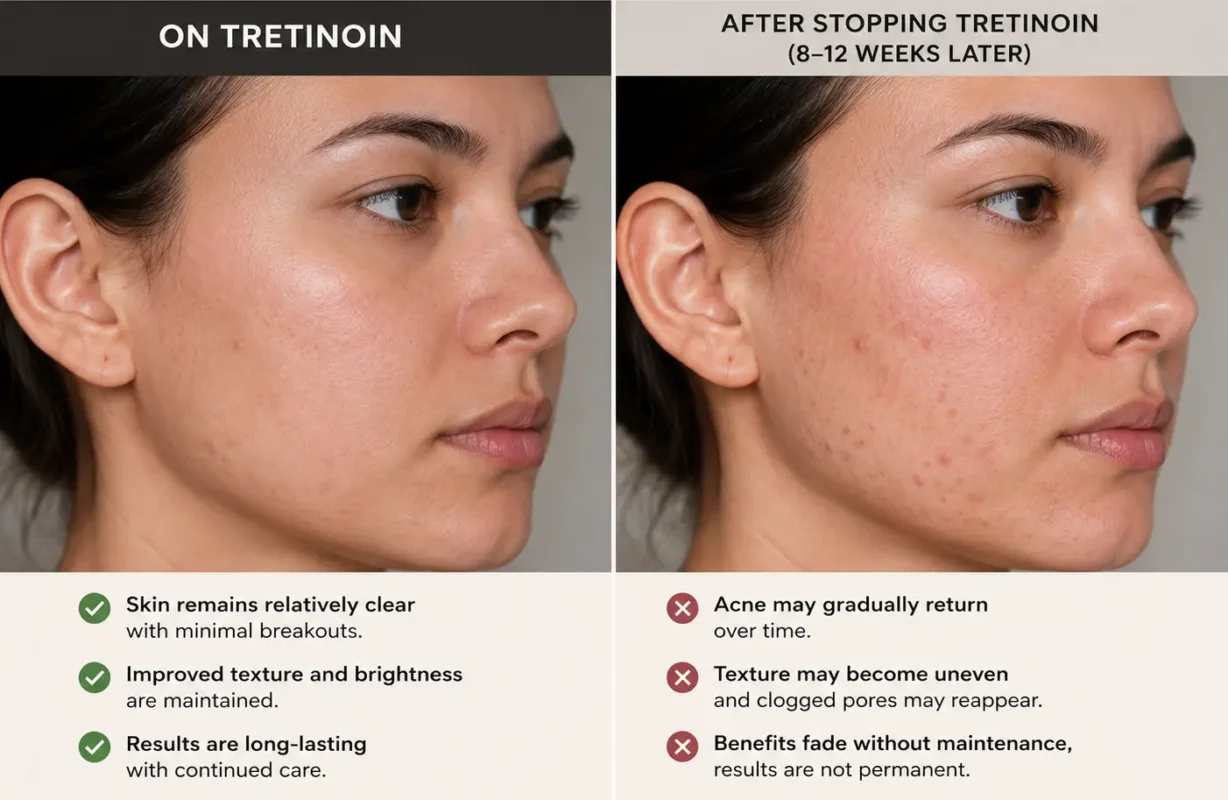
The good news is that stopping tretinoin doesn't cause withdrawal symptoms. However, because tretinoin works by continuously improving your skin's cell turnover, the benefits gradually decrease once you stop using it.
What Happens After You Stop Using Tretinoin?
After discontinuing tretinoin, your skin will slowly return to its natural rate of cell turnover. This doesn't happen overnight, but over several weeks or months, you may notice gradual changes depending on why you were using tretinoin in the first place.
For instance:
- Acne will recur slowly since tretinoin was preventing it.
- Fine lines and wrinkles can become more pronounced due to decreased collagen production.
- The texture of the skin can become rougher.
- The dark spots and post-acne marks will take more time to be removed naturally.
- Your skin will be able to produce oil and shed dead skin cells in the normal way.
Tretinoin works well if you are going to take it regularly for an extended period of time. The benefits that you have enjoyed from taking the product will not fade immediately but they are maintained through continued use.
Why Do Some People Stop Using Tretinoin?
There are several reasons someone may choose or need to stop using tretinoin, including:
- Skin irritation that doesn't improve with proper use.
- Pregnancy or planning to become pregnant, as tretinoin is generally not recommended during pregnancy.
- Increased sun exposure during vacations or outdoor activities.
- Switching to another skincare treatment recommended by a healthcare professional.
- Personal preference or changes in skincare goals.
If you're considering stopping because of dryness or peeling, speak with your dermatologist first. Sometimes adjusting the strength or reducing the frequency of application is enough to solve the problem.
Can You Take a Break From Tretinoin?
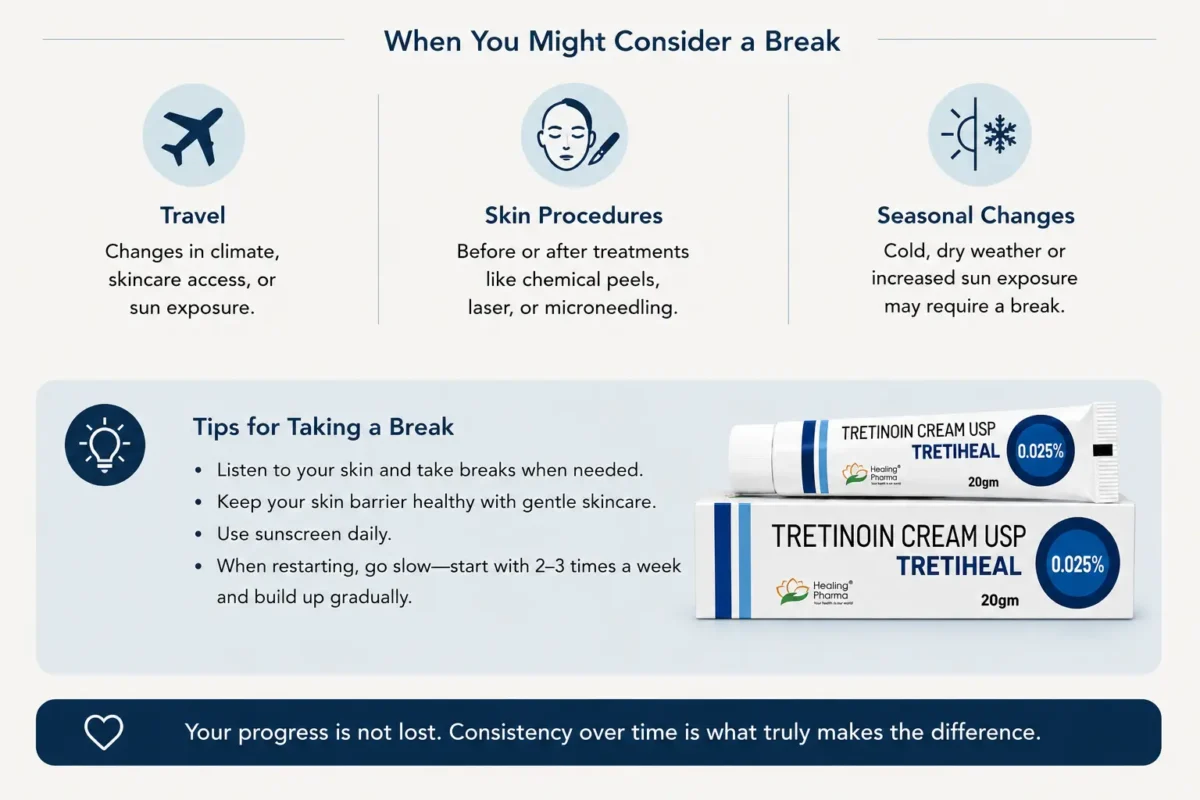
Yes. Some people temporarily stop using tretinoin due to travel, skin procedures, or seasonal changes.
A short break doesn't necessarily erase all of your previous progress. Once you restart tretinoin gradually and follow a consistent skincare routine, you can often continue building on the improvements you've already achieved.
Are There Alternatives to Tretinoin?
If tretinoin is too strong for your skin or you're unable to use it, your dermatologist may recommend a gentler retinoid or retinol product.
Retinol products are generally less irritating than prescription tretinoin because they must first be converted into retinoic acid by the skin. Although results usually take longer to appear, they can still help improve:
- Fine lines
- Uneven skin texture
- Mild pigmentation
- Overall skin appearance
Choosing the right alternative depends on your skin type, sensitivity, and skincare goals.
Tips Before Stopping Tretinoin
If you're planning to stop using tretinoin, consider these tips:
- Speak with your dermatologist before making changes to prescription treatments.
- Continue using sunscreen every day to protect your skin.
- Keep your skin hydrated with a gentle moisturizer.
- Maintain a consistent skincare routine even after stopping tretinoin.
- If switching to another retinoid, introduce it gradually to minimize irritation.