
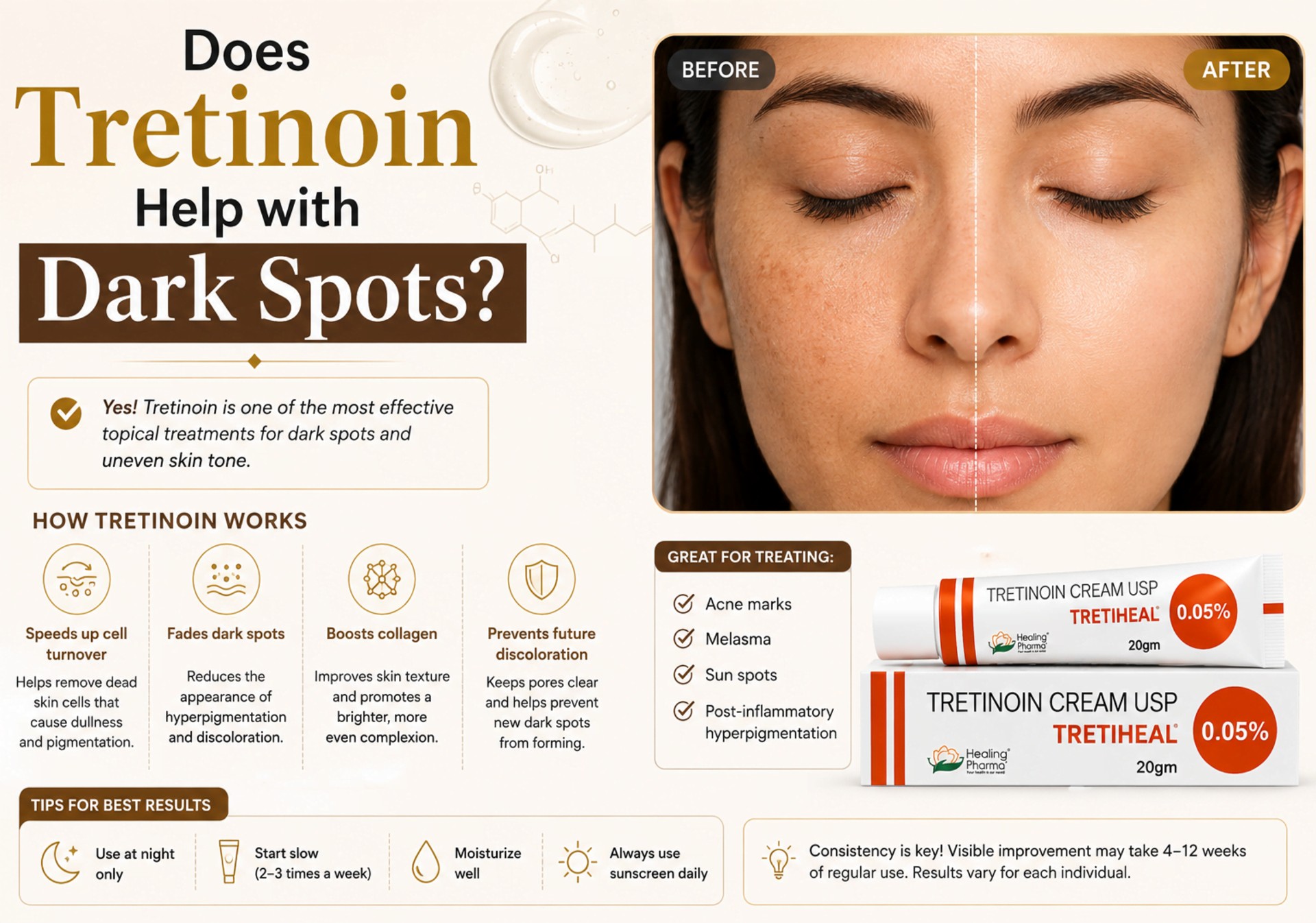

Does tretinoin help with dark spots? This is one of the most popular queries asked by those who have managed to get rid of acne but were left with dark spots. If you managed to get rid of your acne but still have post-acne hyperpigmentation, you are not the only one experiencing such problems. In many cases, dark spots may become even more annoying than acne itself.
This is when tretinoin may be helpful for you. Tretinoin is widely used by dermatologists for decades to treat acne, however, many people have noted that the consistency of their skin also improves. It is not a magical cream that makes all pigmentation problems disappear, however, using tretinoin will help you gradually eliminate certain dark marks by stimulating new cells in your skin.
If you want to know more about fading dark spots with tretinoin, read below.
How Does Tretinoin Help With Dark Spots?
Tretinoin works differently from products that simply brighten the surface of your skin.
Rather, it stimulates cell turnover, making your skin produce more healthy cells and get rid of older pigmented cells. It also stimulates the production of collagen and improves skin texture as a result. If you're new to this treatment, our guide explain What Is Tretinoin Cream and Its Uses?
As new healthy cells take the place of older damaged ones, dark patches will eventually start fading away. The process requires some time, which is why tretinoin is thought of as a long-term therapy option.
Understanding How Does Tretinoin Help With Dark Spots also means recognizing the importance of consistency. For the best results, it is necessary to apply tretinoin on a regular basis and protect your skin from the damaging effect of UV rays, because without it your efforts will be wasted.
What Types of Dark Spots Can Tretinoin Treat?
If you're wondering does tretinoin help with dark spots, it all depends on the type of pigmentation you have. Although tretinoin is known to benefit many types of hyperpigmentation, it isn't effective for every type of dark spot.
Post-Inflammatory Hyperpigmentation
It is the name for brown or dark spots that remain after acne lesions have healed. Mostly affects those who have medium or darker skin. Tretinoin can gradually fade these marks by encouraging new skin cells to replace pigmented ones.
Sun Spots
Tretinoin may reduce their appearance within a period of a few months, in combination with regular sunscreen use.
Irregular Skin Tone
If your skin has an irregular appearance because of slight hyperpigmentation, tretinoin will improve skin tone thanks to increased cell turnover.
Melasma
Melasma is a rather complicated type of hyperpigmentation that occurs in the form of brown patches mostly on cheeks, forehead, and upper lip. Even though tretinoin is one of the ingredients that might be used for treating melasma, it is often prescribed alongside other medications by a dermatologist.
What Tretinoin Can't Do
Although does tretinoin help with dark spots is a common question, it's important to understand its limitations. Tretinoin will not be able to effectively:
- Acne scars
- Birthmarks
- Tattoos
- Hyperpigmentation caused by specific medical conditions
These concerns often require additional treatments such as chemical peels, laser therapy, or micro-needling.
How Long Does Tretinoin Take to Fade Dark Spots?
One of the biggest mistakes is expecting visible results within a couple of weeks' time. Pigment gradually becomes less noticeable.
This is an approximate schedule of results that many users follow.
Weeks 1–4
Your skin adjusts to tretinoin treatment.
You may experience:
- Dryness
- Peeling
- Redness
- Increased sensitivity
During this period, the spots won't get lighter.
Weeks 6–8
When your skin becomes accustomed to tretinoin, you will see signs of:
- Brightened skin tone
- Improved skin texture
- Healthy complexion
Pigmentation may start looking slightly lighter, but changes are often subtle.
Months 2–3
Improvements begin appearing for many users.
The spots become:
- Less noticeable
- Smaller
- Blend well with the skin around them
Months 3–6
This is when regular use starts showing its true results. Post-acne spots and milder cases of sunspots keep fading, thus making skin look bright and even. Some cases of stubborn pigmentation take up to 6 months or even longer to get improved.
It's important to remember that sun protection is a critical component that affects the speed of fading. Without it, your progress will be ruined by new UV damages.
Tips to Get Better Results
When your aim is to fade the dark spots effectively, consistency is more crucial than choosing more powerful products.
Here are some tips that may help.
Start Slowly
In case you are just starting tretinoin therapy, use it two to three nights a week, gradually increasing the number of times per week with the skin adaptation.
Use a Small Pea-Sized Amount
A larger amount does not help in pigmentation removal more quickly. It only irritates the skin and makes it drier.
Moisturize Daily
The healthy skin responds much better to tretinoin. Fragrance-free moisturizer decreases the peeling effect and helps maintain the skin barrier.
Apply Sunscreen Daily
The broad-spectrum SPF 30 or more is one of the most crucial components in any pigmentation treatment regimen. Dark spots without proper sun protection fade much slower and even become darker.
Stay Consistent
Application gaps make it harder to see progress. Think of tretinoin as a long-term treatment and not a quick solution.
Be Kind to Your Skin
Do not overdo it with scrubs or exfoliation while adapting to tretinoin treatment. Keeping your routine simple often produces the best long-term results.