

Best Moisturizers to Use with Tretinoin
Using tretinoin for the first time can be thrilling, especially when you are hoping for improvements on your acne, fine lines, texture or discoloration. However, the one thing about tretinoin cream that many new users do not take seriously is applying moisturizer with tretinoin.
From a dermatologist point of view, the most common issue I come across is patients applying tretinoin properly but failing due to having extremely dry, tight, flaky or irritated skin. In most cases, the problem doesn’t involve completely stopping the use of tretinoin. It requires educating yourself on the right moisturizer with tretinoin and establishing a regimen that your skin can handle. The good news is that you don’t need an expensive skincare routine. A simple, fragrance-free moisturizer with barrier-supporting ingredients can make tretinoin much easier to use consistently.
The best moisturizer for tretinoin is usually one that is gentle, fragrance-free, hydrating, and designed to support the skin barrier. Look for ingredients such as:
- Ceramides: For supporting the skin barrier.
- Glycerin: Attracts and helps retain moisture.
- Hyaluronic acid: Helps hydrate the skin.
- Squalane: For moisturizing dry skin.
- Panthenol: Can provide additional soothing and hydration.
The texture you choose should depend on your skin type. If you have oily skin or an acne tendency, a lightweight lotion or gel-cream might be more appropriate for you. If tretinoin has made your skin very dry or flaky, a heavier cream might be more appropriate. I personally would advise against choosing a moisturizer with tretinoin solely based on marketing claims. It is more practical to pick a simple moisturizer that works well with your skin than one with multiple active ingredients.
Additionally, “non-comedogenic” label does not mean that it is perfect for everyone. If a moisturizer is causing recurrent breakouts or irritation, try a different product.
Why Use Moisturizer with Tretinoin?
Tretinoin increases skin cell turnover, and during this adjustment period, there might be dryness, peeling, redness, tightness, and irritation. Moisturizer does not negate the effects of tretinoin, using moisturizer with tretinoin can help support the skin barrier and make the treatment more comfortable. if your skin is irritated so badly that you need to stop using tretinoin, then it may be hard for you to follow the schedule.
Think of moisturizer as the part of your tretinoin routine rather than something you only use when your skin starts peeling. A good moisturizer with tretinoin can help:
- Reduce dryness and tightness
- Improve skin comfort
- Support the skin barrier
- Reduce visible flaking
- Make tretinoin easier to tolerate
- Maintain consistency in skincare routine
And one thing that people sometimes do wrong is try to “get through” the severe irritation because they believe irritation means tretinoin is working better. But more redness and peeling do not always signify better effects. If the skin persists in burning, swelling, cracking and being extremely irritated, consult your dermatologist instead of just increasing the use of moisturizer with tretinoin or ignoring the problem.
Two Effective Methods: Buffer vs. Sandwich
Tretinoin combined with a moisturizer with tretinoin can be done in different ways. There are two widely used dermatologist recommended methods are the Buffer method and Sandwich method. These methods assist in making the adjustment easier and ensuring that you get all the benefits of Tretinoin without irritation.
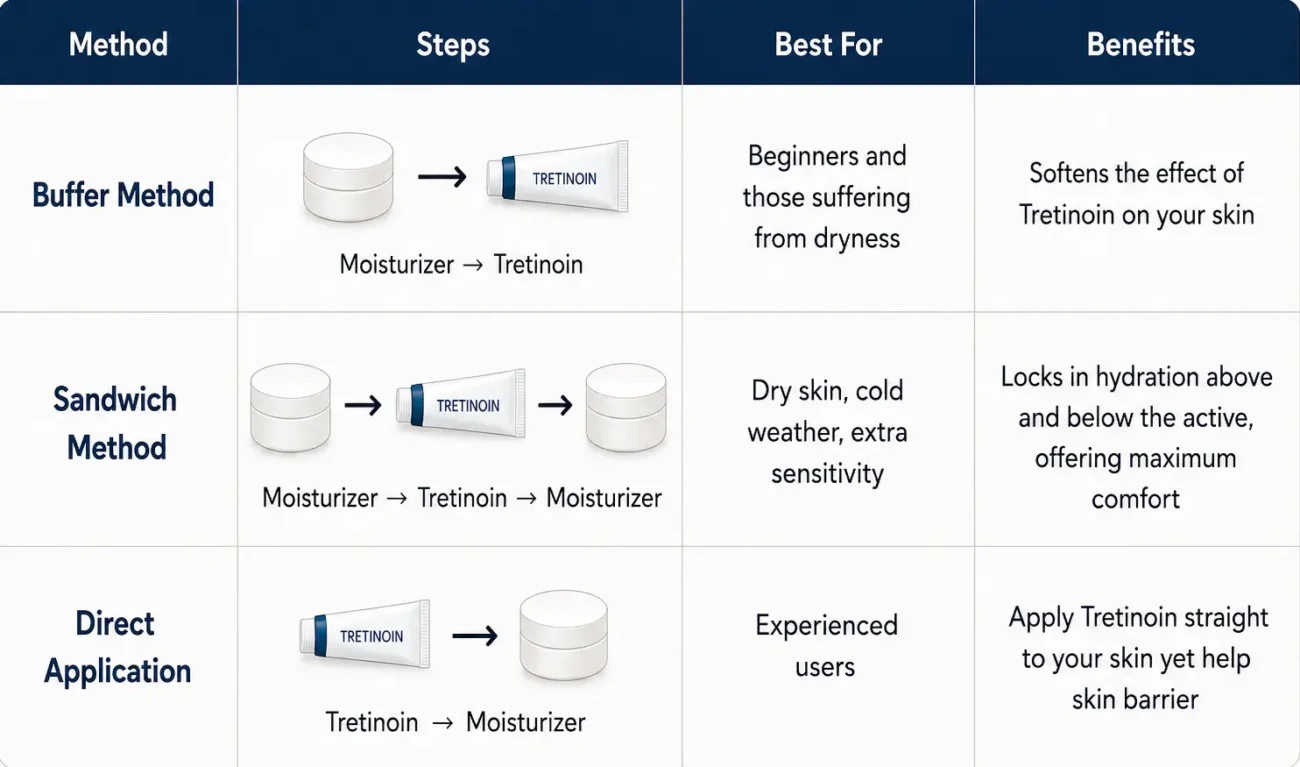
All these techniques are correct. It all depends on what your skin needs at the moment, seasonal changes, and the duration of using moisturizer with Tretinoin.
Best Types of Moisturizers for Tretinoin
There is no single best moisturizer with tretinoin that is always the most effective for everyone while using tretinoin. Your skin type and level of dryness will help you choose the right product.
For Dry Skin
If you naturally have dry skin or tretinoin has made your skin noticeably flaky, try to find a richer moisturizer with ceramides, glycerin, squalane or other hydrating ingredients. Creams and richer lotions will be more hydrating compared to very light gels.
For Oily or Acne-Prone Skin
If your skin becomes oily easily, you do not necessarily need to avoid moisturizer. Try to use lighter lotions or gel-creams which feel comfortable on your skin without leaving greasy finish. Not using moisturizer due to having oily skin can make your skin care regimen less tolerable.
For Sensitive Skin
If your skin is sensitive, try to keep the formula simple. A fragrance-free moisturizer with few potentially irritant ingredients will be a better choice than many products with several exfoliating acids, essential oils or active ingredients. This is especially relevant when using tretinoin.
For Combination Skin
Sometimes combination skin needs some experimentation. You can like using lighter moisturizer with tretinoin all over your face and richer cream in places where your skin gets dry.
How to Use Moisturizer with Tretinoin
The simplest routine is usually the easiest to maintain.
Night Routine
Step 1: Gently cleanse
Wash your face with a mild cleanser. Do not scrub harshly or use an exfoliating cleanser.
Step 2: Wait for your skin to be dry
Allow your face to become completely dry before applying tretinoin. Applying tretinoin to damp skin can increase irritation for some people.
Step 3: Apply tretinoin
Apply the quantity recommended by your dermatologist . A pea-size amount is normally required for complete face. Apply a thin layer instead of thick one. Do not apply near eyelids, nasal angles, lips and areas of broken or irritated skin unless instructed otherwise by your dermatologist.
Step 4: Moisturize
Apply your moisturizer after tretinoin and wait for its absorption. It is all that is necessary. No five or six other products are necessary.
Morning Routine
During the day cleanse/rinse your face, apply moisturize and finish with a broad-spectrum sunscreen of SPF 30 or higher. The sun protection is extremely necessary when treating the problems of pigmentation, photoaging or acne scars.
Can You Use Moisturizer Before Tretinoin?
Yes, Applying moisturizer before tretinoin is often referred to as buffering. This can be helpful for people who suffer from dryness and irritation while beginning their treatments. A simple approach is:
- Wash your face
- Allow the skin to dry
- Apply a thin layer of moisturizer
- Wait until it sinks into your skin
- Apply tretinoin cream
- Apply more moisturizer if necessary
Some people are afraid that moisturizer with tretinoin may interfere with the work of tretinoin, but the truth is that this technique can help manage irritation from the using of this treatment and thus make it more tolerable. Still, you do not have to use this method forever because if your skin gets used to tretinoin, then you may find it easier to apply it on dry skin.
Can You Use Moisturizer After Tretinoin?
Yes, you can use moisturizer after applying tretinoin, it is one of the most effective ways of helping your skin adapt to tretinoin usage. one of the first things I emphasize is that more irritation does not mean better results. Tretinoin leads to such side effects as dryness, flaking, redness, and tightness especially in the early stages of treatment. The important thing is to know when and how much of each product should be used.
Moisturizer can help by:
- Reducing dryness and flaking
- Supporting the skin barrier
- Increase skin comfort
- Minimize signs of irritation
- Helping you stay consistent with tretinoin
One of the most common mistakes that people do is to discontinue tretinoin treatment due to skin dryness. In the many cases, adjusting your routine and using the right moisturizer with tretinoin can make the treatment much easier to tolerate.
Medical Disclaimer
This article is for informational purposes only and does not replace professional medical advice. Tretinoin may cause dryness or irritation. Follow your prescriber’s instructions and consult a healthcare professional for severe or persistent irritation.