


If you have been studying tretinoin cream 0.1%, you have realized that it is one of the stronger concentrations of tretinoin. Does 0.1% tretinoin perform better than 0.025% or 0.05%? Can it treat acne faster? Is it suitable for wrinkles and dark spots? How can you apply tretinoin 0.1% without experiencing intense irritation? The main consideration here is that higher concentrations do not necessarily make for a good treatment. Tretinoin cream 0.1% can be helpful, but it may also cause more irritation. All depends on your tolerance, condition of your skin, and your ability to apply the medication regularly. Tretinoin is a retinoid that is applied topically and belongs to a group of vitamin A analogues. It has been used for many years in dermatology, especially for the treatment of acne. Some formulations of tretinoin can be used for treating the signs of photoaging. Tretinoin 0.1% acts via stimulating the process of skin-cell turnover and epidermal cell lining hair follicles. This article will discuss the uses, advantages, side effects, method of application, results that can be expected, irritation control, moisturizer application, and contraindications of tretinoin cream 0.1%.
What Is Tretinoin Cream 0.1%?
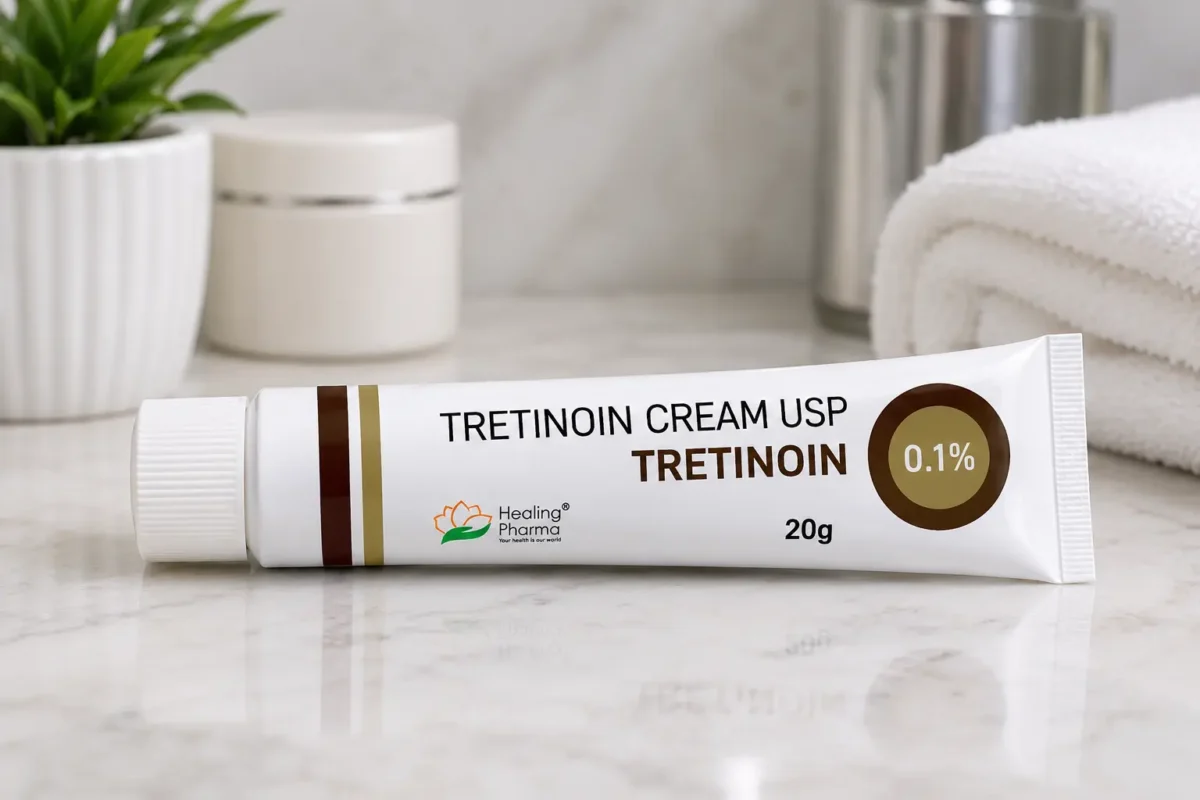
Tretinoin cream 0.1% is the topical medication, which contains 0.1% of tretinoin, a synthetic retinoid obtained from vitamin A. The medication is used topically for the treatment of acne vulgaris in the 0.1% cream formulations, described in the current U.S. labeling of the drug. Tretinoin is an all-trans-retinoic acid by chemical structure. Unlike retinol, which requires conversion in skin to become an active retinoic acid, tretinoin is the active retinoid. The 0.1% concentration is usually considered the high strength tretinoin formulation compared to 0.025% and 0.05%. This does not necessarily mean that everybody needs 0.1%. Indeed, the switch to the higher concentration or start of its use without consultation with dermatologist may cause additional skin irritation. Dermatologists usually increase the dose of retinoid according to the tolerance of the patient’s skin to it. The lower concentration of the tretinoin, less frequent application, and prior application of moisturizer may decrease skin irritation.
What Is Tretinoin Cream 0.1% Used For?
The most established medical use of tretinoin cream 0.1% is acne treatment. Tretinoin could be used in other formulations or concentrations for various skin problems. Still, you shouldn’t think that all creams containing tretinoin in 0.1% concentration is established or approved for all types of cosmetic skin problems.
Tretinoin cream 0.1% for Acne
Acne is among the major indications for using topical tretinoin. Tretinoin helps regulate the process of skin cell exfoliation in the hair follicle. It decreases the development of microcomedones, which are the initial stages of clogged pores that can become visible acne spots. Tretinoin might be especially effective in case of acne in which the main mechanism is clogging of pores, such as:
- Blackheads
- Whiteheads
- Small clogged pores
- Acne associated with abnormal follicular cell turnover
Dermatologists might use retinoids topically in their acne treatment plans depending on the type of acne. The key idea here is that tretinoin is not a spot treatment. The thick application to each pimple separately is not what topical tretinoin is designed for.
Tretinoin cream 0.1% for Fine Lines and Wrinkles
Tretinoin has been heavily studied in relation to photo-aged skin. Improvements in symptoms of photoaging, like fine lines and wrinkles, mottled pigmentation, and skin texture were observed in research involving topical tretinoin application. It is crucial to understand the difference between the molecule of tretinoin and a specific approved indication of a certain 0.1% cream. Not all tretinoin creams 0.1% have indications for treating wrinkles. Currently, for example, indications for some 0.1% tretinoin creams in the United States include treatment of acne.
Tretinoin for Uneven Skin Texture
Using tretinoin could impact skin cell turnover, which is one of the factors that makes retinoids a popular choice for texture improvement. One could observe smoother skin in time after applying tretinoin properly. There could be numerous reasons for rough skin texture. Skin dryness, eczema, dermatitis, acne, large pores, scarring, and other skin problems could affect texture. Applying a powerful retinoid to highly inflamed skin could only worsen the condition.
How Does Tretinoin 0.1% Work?
The understanding of how tretinoin cream 0.1% acts might clarify both its benefits and side effects. The impact of tretinoin on cellular processes related to keratinization and cell differentiation is known. Tretinoin has been found to lower the cohesion between cells in sebaceous follicles and decrease microcomedone formation when treating acne. It has also been found to increase the turnover rate of cells of follicular epithelium facilitating the movement of comedonal contents out of the follicles. This makes tretinoin treatment unlike any ordinary exfoliating cream.
Tretinoin does not only remove dead skin cells from the surface of the skin. It has an effect on biological processes going on inside the skin. When applied regularly, it might help decrease the probability of pore occlusion. The effect of tretinoin cream 0.1% on photoaging has been extensively researched. The retinoids increase turnover of skin cells and collagen synthesis which contributes to even skin tone and reduced visibility of fine lines and wrinkles. But this is a process that takes time. Adding more tretinoin will not make the skin remodel immediately. Actually, applying more of this compound may cause more irritation without the expected results.
How to Use Tretinoin Cream 0.1%
If your dermatologist has prescribed tretinoin cream 0.1%, follow the exact directions provided with your medication. tretinoin cream tretinoin cream is a high concentration, special care should be taken during application. is a high concentration, special care should be taken during application.
1. Cleansing the Skin
Use a mild cleanser and warm water to cleanse your skin gently. Avoid scrubbing hard as it could cause damage to your skin. Your intention is to clean the skin from dirt, oils, makeup, and sunscreen products.
2. Dry Your Skin
Many people report that tretinoin is easily tolerated when used on totally dry skin. The cream causes more irritation when used on damp skin.
3. Apply a Thin Layer
Apply a recommended dose of the cream. Please note that applying more cream than required does not necessarily speed up the process.
4. Avoid Sensitive Areas
Avoid contact with:
- Eyes
- Eyelids
- Lips
- Corner of the nose
- Damaged skin
- Severely irritated skin
5. Apply Moisturize
Dry and irritated skin requires moisture to strengthen the skin barrier. AAD explicitly states that using moisturizer helps people tolerate acne medications like tretinoin.
6. Protect Your Skin from Sunlight
Use broad-spectrum sunscreen daily and limit unnecessary sun exposure. This step is especially critical if you aim to improve your skin color, photodamage, and texture.
How Long Does Tretinoin 0.1% Take to Work?
One of the major myths regarding tretinoin is that a higher strength means a faster result. This is not so. Tretinoin is a gradual therapy. It can take a few weeks for acne to start showing improvement, and skin texture and photoaging effects may take even more time. The first phase may even be discouraging at times. Dryness, flaking, and redness can precede the period when the skin adapts to the treatment. As far as acne goes, topical retinoids are usually used on a regular basis instead of being assessed after a few days. I advises to follow the treatment regimen, and adds that dermatologists may regulate the usage of retinoids in case of irritation. In terms of cosmetics and skin aging, collagen changes are gradual.
A realistic timeline may look like this:
First few weeks: Dryness, irritation or tightness of the skin might occur. The appearance of the acne might not have improved much at all at this point.
Several weeks: There might be some improvement noticed in the clogged pores and acne by now.
Several months: More noticeable improvements may develop when tretinoin is being used consistently and tolerated well.
Your timeline will most likely be different. If you are having extreme irritation, do not just sit back and wait. Talk to your dermatologist about it.
Tretinoin Cream 0.1% Side Effects
The key problem with tretinoin cream 0.1% is its irritation. Since 0.1% is a higher concentration, there is a possibility that some individuals will find it more irritating than lower concentrations. The possible side effects include:
- Dryness
- Peeling
- Flaking
- Redness
- Stinging
- Burning
- Tightness
- Increased sensitivity
- Irritation
This effect becomes particularly evident during the initial stages of treatment. It should be noted that irritation does not necessarily indicate an allergy to tretinoin. According to the AAD, irritated skin usually indicates that there is no allergy and dermatologists sometimes manage to adjust therapy to make retinoids more tolerable.
When Should You Stop and Seek Medical Advice?
Do not ignore any severe or uncommon side effects. Contact a dermatologist in case you experience the following side effects:
- Swelling
- Blistering
- Severe burning
- Severe inflammation
- Persistent pain
- Significant skin damage
How to Use Tretinoin 0.1% With Less Irritation
If your dermatologist suggests tretinoin cream 0.1%, you have several options on how to make your regimen easier.
1. Start As Directed By Your dermatologist
Do not assume that you should start with the highest strength retinoid on a daily basis unless your dermatologist tells you to.
2. Some people require a step-wise approach
The dermatologists will ease irritation through using lower dose, applying retinoids less frequently, or applying moisturizer beforehand.
3. Use Gentle Cleanser
Avoid harsh cleansers and aggressive scrubs. Damaged skin barrier might increase tretinoin intolerance.
4. Apply Moisturize Regularly
The moisturizer might help you to prevent drying out of the skin and continue your acne treatment. When choosing moisturizer for oily or acne-prone skin, look for the products that:
- Oil-free
- Non-comedogenic
- Won’t clog pores
The AAD recommends moisturizer as part of acne skincare when medications such as tretinoin cause dryness or irritation.
5. Avoid Over-Exfoliating
Another common mistake is combining tretinoin with a few other exfoliating products to achieve faster results. Be cautious with frequent use of:
- Aggressive exfoliating acids
- Scrubs
- Harsh cleansing products
- Alcohol-heavy products
- Other potentially irritating treatments
It is not necessary for your skin to be irritated for tretinoin to work.
6. Do Not Apply Too Much Tretinoin
Applying more product will not speed up the process proportionately. Too much product may cause additional irritation.
7. Use Sunscreen
Daily sun protection is required. Use a broad spectrum sunscreen and reduce unnecessary UV radiation, especially when using tretinoin to treat skin that has acne scars, uneven pigmentation, or photodamage.
8. Be Consistent
A moderate routine that you can keep up with is more effective than starting and stopping frequently due to irritation.
Can You Use Moisturizer With Tretinoin 0.1%?
Yes, Moisturizer with tretinoin cream 0.1% can be an essential component of a tolerable skincare regimen. Tretinoin can cause dryness and irritation, I advises on moisturizer to help patients tolerate topical acne medication such as tretinoin. There are different ways a dermatologist may add moisturizer.
Moisturizer After Tretinoin
A gentle moisturizer can be applied after the prescribed tretinoin application if it fits into your treatment plan.
Moisturizer Before Tretinoin
A dermatologist can suggest using moisturizer before tretinoin if a person suffers from irritation because of sensitivity. The AAD highlights the application of moisturizer before tretinoin as one way of dealing with strong retinoids.
Finding the Right Moisturizer
When you have acne-prone skin, choose a moisturizer that will suit you best, and it will be:
- Non-comedogenic
- Oil-free
- Fragrance-free, especially in the case of sensitive skin
- Suitable for your skin type
When you experience dryness as a side effect of tretinoin, you may need a richer moisturizer.
Remember: moisturizer does not negate the effect of tretinoin. The main aim of it is to provide a better barrier of your skin and improve tolerability.