


If you are starting tretinoin for the first time, tretinoin cream 0.025% is often one of the concentrations people ask about most. You might be wondering whether it is strong enough to work or how frequently you have to use it, or whether the dryness and flaking are inevitable. The one piece of advice I would like to give from the beginning is the following more is not always better when it comes to tretinoin. The best concentration of tretinoin will be the one which works for your skin concern and yet is comfortable enough for you to tolerate.
Tretinoin is a retinoid medication which is topically applied and is created on the basis of vitamin A. It has been extensively used in dermatology for such conditions as acne and some formulations of tretinoin are used to enhance the appearance of skin damaged by sunlight. Tretinoin gradually changes skin cells metabolism. Here is everything you need to know about tretinoin cream 0.025%, Here is everything you need to know about tretinoin cream 0.025%, including what it can be used for, how to apply it, what side effects to expect, and how to make your routine easier to tolerate.
What Is Tretinoin Cream 0.025%?
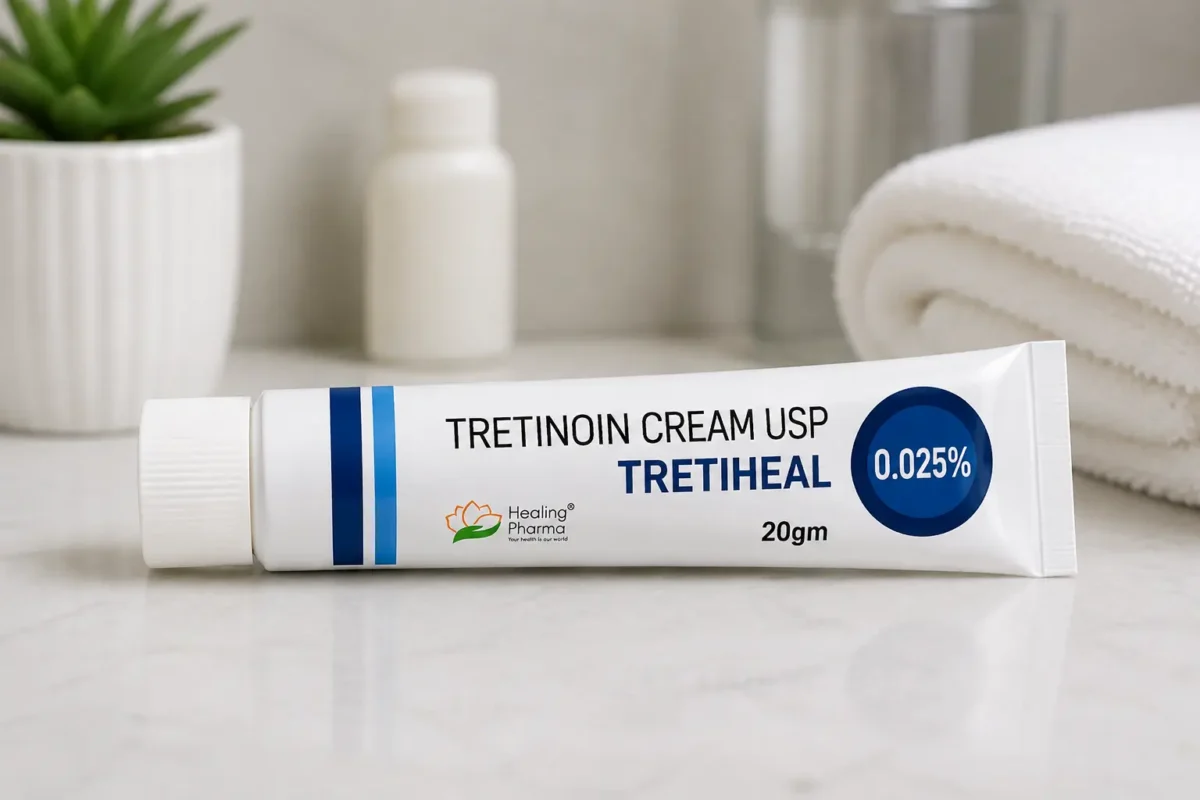
Tretinoin cream 0.025% is a topical prescription medication that contains 0.025% tretinoin. Tretinoin belongs to a class of medications called retinoids that are analogs of vitamin A. The 0.025% concentration is usually perceived as a low concentration of tretinoin relative to 0.05% and 0.1%. This is not necessarily an indication of poor efficacy because the use of a low concentration may be helpful for people that are new to the product or those who tend to have skin irritations. There is a difference between the tretinoin cream and over-the-counter retinol cream. Tretinoin is a ready-to-use retinoid preparation, while retinol needs to be converted in the skin into active retinoic acid. Tretinoin being a medicine, should be used following your dermatologist instructions. Proper concentration and formulations will depend on the skin condition you have and its sensitivity.
Is Tretinoin cream 0.025% Strong?
Yes, Tretinoin cream 0.025% is usually perceived as a low concentration in comparison with 0.05% and 0.1%, yet it remains a potent prescription retinoid. For people who have never applied tretinoin, 0.025% might be more suitable than a high concentration. Yet, there is no general recommendation that all people must start with this concentration. Your dermatologist will take into consideration:
- Skin sensitivity
- The condition being treated
- Previous retinoid experience
- The treatment area
- Any other medicines or skincare products
- Your response to treatment
A high concentration does not necessarily mean a better concentration. Irritation can prevent regular use of tretinoin.
What Is Tretinoin Cream 0.025% Used For?
Tretinoin cream 0.025% for Acne
Acne is one of the most established uses of topical tretinoin. Tretinoin normalizes the turnover of skin cells in the hair follicle that helps in reducing the incidence of blocked pores. Tretinoin can be used to treat comedonal acne, which includes blackheads and whiteheads, and can even be used in cases of inflammatory acne. Topical retinoids are recommended by Dermatologist to use for the treatment of acne since they help in unclogging the pores and decreasing the inflammation. Tretinoin can be considered a maintenance treatment for acne since it can reduce the occurrence of new blocked pores.
Tretinoin cream 0.025% for Fine Lines and Wrinkles
Tretinoin has also been tested for photoaging. Using tretinoin topically for prolonged periods of time may help with the look of wrinkles, rough skin, and some changes in skin coloration due to excessive exposure to sun. It should be mentioned that expectations should be realistic. Tretinoin cannot get rid of wrinkles overnight. Its results come gradually because of changes in cellular turnover and collagen production.
Tretinoin for Uneven Skin Texture
If roughness and uneven texture are due to clogged pores, acne, or photoaging, then tretinoin could be helpful in creating more even and smooth skin. Not every type of texture problem responds to tretinoin. It is highly advised that you seek consultation from your dermatologist for persistent bumps, rash, scarring, and other skin texture issues that you cannot explain.
How Does Tretinoin 0.025% Work?
Tretinoin works by interacting with retinoid receptors in skin cells and on processes related to cellular differentiation and turnover. For acne, one important effect is the normalization of the cells lining the hair follicle. It helps prevent the development of microcomedones, which are considered to be precursors of the acne. For photoaged skin, tretinoin acts on epidermal turnover and collagen remodeling. There are studies showing structural changes in photoaged skin after tretinoin treatment. That is the reason why patience is required. A higher concentrations of tretinoin do not speed up the process of skin remodeling. Excessive use of tretinoin can cause higher dryness, redness, burning sensation and peeling of skin.
How to Use Tretinoin Cream 0.025%
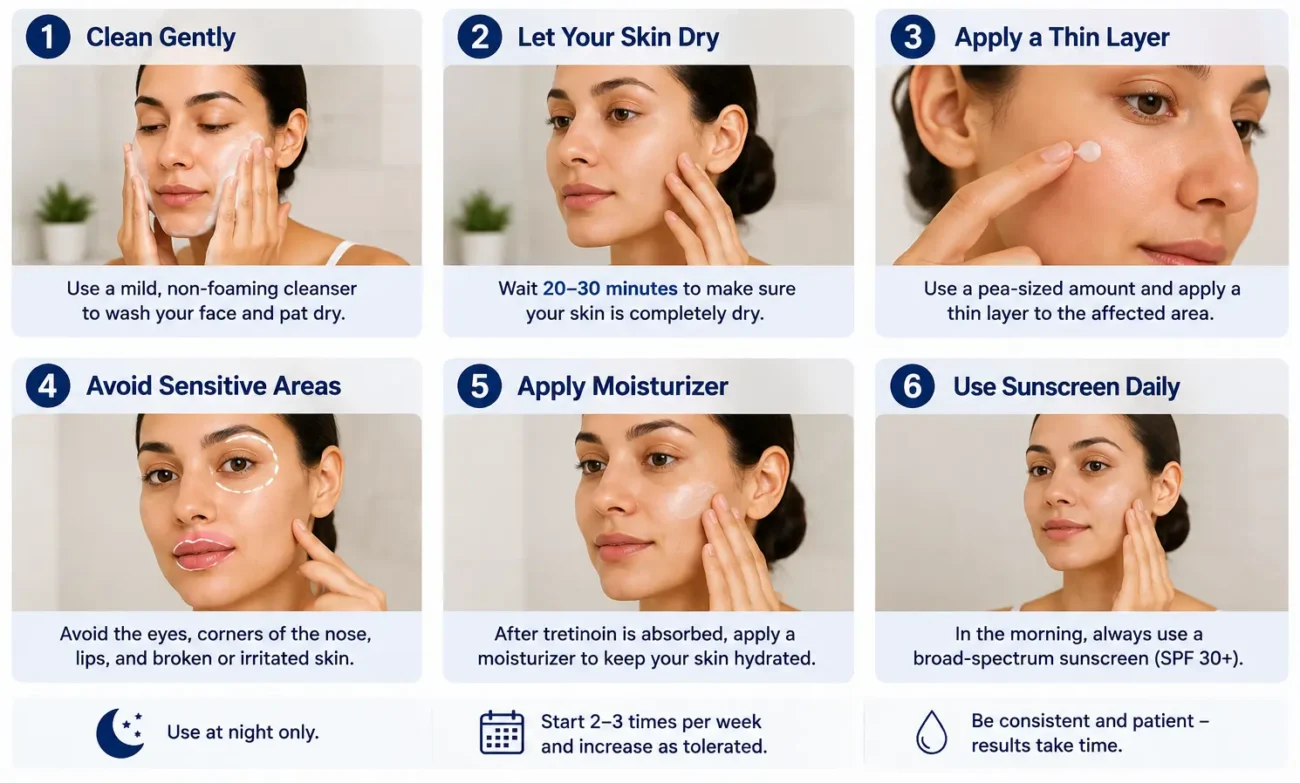
If your dermatologist has prescribed tretinoin cream 0.025%, follow the specific instructions included with your medication. The general procedure includes the following stages.
1. Clean Gently
Gently wash your face or other treatment area with a mild soap and lukewarm water. Do not scrub as mechanical irritation makes tretinoin less tolerable.
2. Let Your Skin Dry
Dry your skin gently and let it get thoroughly dried before applying tretinoin. Some people are more prone to irritation when tretinoin is applied to the wet skin.
3. Apply a Thin Layer
Use the quantity of tretinoin which was prescribed to you. For the facial treatment, just a little amount of tretinoin is required to cover the treatment area in a thin layer. Do not think that the application of a thicker layer will result in better effects.
4. Avoid Sensitive Areas
Do not apply tretinoin to the eyelids, lips, corners of the nose, irritated and damaged skin unless your dermatologist recommends doing so.
5. Apply Moisturizer
Apply a gentle moisturizer to the skin in case it becomes dry or irritated. Moisturizing is an important part of making a retinoid routine more comfortable.
6. Use Sunscreen During the Day
Use broad-spectrum sunscreen and limit unnecessary UV exposure. Sun protection is especially important for photoaging and pigmentation problems.
How Long Does Tretinoin 0.025% Take to Work?
The biggest mistake that I see people making is evaluating tretinoin too early. Tretinoin is not something that shows its effects very quickly. Acne will need a couple of weeks to improve, or even more time, sometimes, and for some people, this medication will cause irritation or even an improvement in acne symptoms initially. When it comes to photoaging, the effects are even more delayed. It will take months to see any positive effects from the treatment of fine lines and sun damaged skin. Your results can depend on:
- The condition being treated
- Your skin type
- How consistently you use tretinoin
- Pea size amount applied
- Your tolerance to treatment
- Sun exposure
- Other skincare products you use
Do not increase dosage or frequency if you have strong irritation without seeing any results. Consult with your dermatologist first.
Tretinoin Cream 0.025% Side Effects
Dryness and irritation are some of the most common side effects encountered when starting treatment using topical tretinoin. These include:
- Dryness
- Peeling
- Flaking
- Redness
- Stinging
- Burning
- Tightness
- Sensitivity
These effects are often more noticeable during the first few weeks. It is important to note that having such effects does not necessarily indicate an allergy to tretinoin. The reaction may simply be the skin adapting to the use of the medication. However, any severe reactions such as extensive swelling, blisters, extreme burning, and inflammation cannot be overlooked. If irritation is interfering with treatment, you should discuss this with your dermatologist.
Can You Use Moisturizer With Tretinoin cream 0.025%?
Yes, Moisturizer containing tretinoin cream 0.025% can be an essential component in a daily routine, particularly if you suffer from skin dryness. One can usually apply moisturizer after using tretinoin. People with sensitive skin may also use a Buffering Approach by applying moisturizer before tretinoin. I always advice using moisturizers to minimize irritation that is caused by retinoids. Choose the texture depending on your skin type. If you have oily or acneic skin, lighter lotion or gel-cream might suit you better. If tretinoin makes your skin very dry, a richer cream may be preferable. Moisturizer is not used to enhance tretinoin but to provide care for the skin barrier.
Who Should Avoid Tretinoin cream 0.025%?
Tretinoin may not suit everybody. If you are pregnant, expectant of pregnancy, or if there is a chance that you might be pregnant, consult your dermatologist before you use tretinoin. It is advised to avoid the use of topical retinoids while pregnant. You must consult your dermatologist in case you suffer from:
- Serious skin irritation
- Eczema or eczematous dermatitis
- Sunburn or damaged skin
- Wounds on the treated area
- Previous skin sensitivity to topical retinoids
- An allergy to ingredients in the product
- Other prescription medications being applied to the same area
Medical Disclaimer
This article is for informational purposes only and does not replace professional medical advice. Tretinoin may cause dryness or irritation. Follow your prescriber’s instructions and consult a healthcare professional for severe or persistent irritation.