

Understanding Tretinoin vs Retinol
When it comes to skincare, the names tretinoin vs retinol often come up in conversations about anti-aging and acne treatments. But what exactly are these substances, and how do they work? Understanding their origins, chemical structures, and mechanisms of action can help demystify these popular skincare ingredients.
Tretinoin, also known as all-trans retinoic acid, is a derivative of vitamin A. It was first developed in the 1960s and has since been widely used in dermatology for its efficacy in treating acne, photoaging, and hyperpigmentation. Tretinoin works by accelerating cell turnover, promoting the shedding of old skin cells, and encouraging the growth of new, healthy cells. This process helps to unclog pores, reduce the appearance of fine lines and wrinkles, and improve overall skin texture and tone.
Retinol, on the other hand, is a less potent form of vitamin A that is commonly found in over-the-counter skincare products. It must be converted into retinoic acid within the skin cells to become active. This conversion process makes retinol gentler on the skin compared to tretinoin, which is already in its active form. Retinol also promotes cell turnover and collagen production, but at a slower rate, making it suitable for individuals with sensitive skin or those new to retinoids.
Both tretinoin vs retinol belong to the retinoid family, a class of compounds derived from vitamin A. They share similar benefits but differ in their potency and the speed at which they deliver results. Understanding these differences is crucial in determining which one is best suited for your specific skincare needs and goals.
Key Differences Between Tretinoin vs Retinol
There are several key differences between the two that can influence your choice of treatment. These differences primarily revolve around their potency, speed of action, and how they are used in skincare routines.
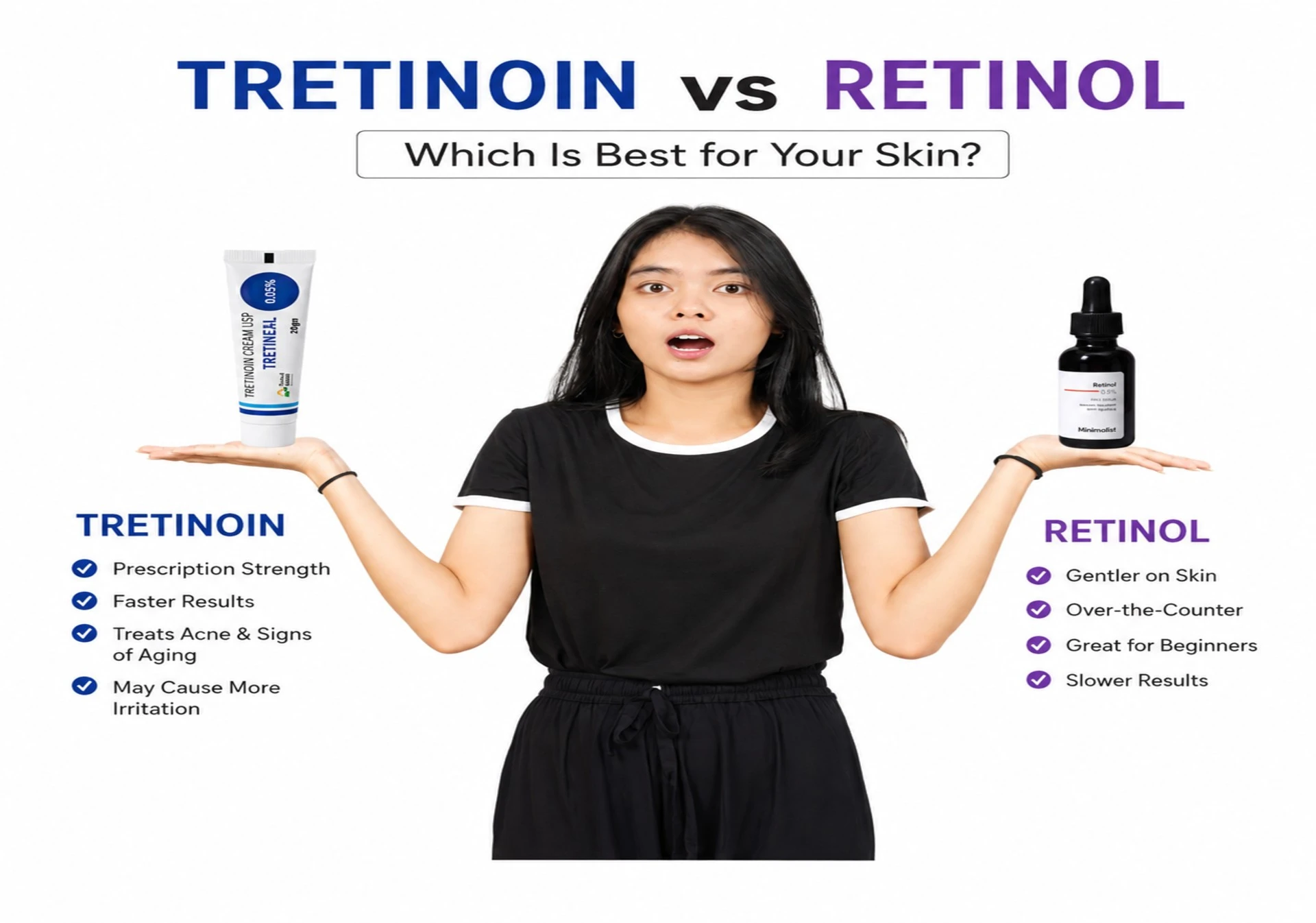
Tretinoin is a prescription-strength retinoid, meaning it is more potent and requires a doctor’s prescription for use. This increased potency allows tretinoin to deliver faster and more dramatic results compared to retinol. However, with this increased efficacy comes a higher likelihood of side effects, such as redness, peeling, and irritation. Tretinoin is often recommended for individuals with more severe skin concerns, such as significant acne or pronounced signs of aging.
Retinol, in contrast, is available over the counter and is less potent than tretinoin. This makes it a more accessible and user-friendly option for those looking to incorporate a retinoid into their skincare routine without the need for a prescription. Retinol’s gentler nature also means it is less likely to cause irritation, making it a suitable choice for individuals with sensitive skin or those new to retinoids. However, because retinol is less potent, it may take longer to see visible results compared to tretinoin.
Another key difference between tretinoin vs retinol lies in their stability. Tretinoin is more sensitive to light and air, which can degrade its effectiveness. As a result, products containing tretinoin are typically packaged in opaque, airtight containers to protect the active ingredient. Retinol, while also sensitive to light and air, is generally more stable and can be found in a wider variety of packaging options. This difference in stability can impact the shelf life and efficacy of the products containing these ingredients.

Benefits of Using Tretinoin for Skin Care
Tretinoin is a prescription retinoid that can solve various skin issues with regular use.
- Acne: Prevents clogging of pores and new outbreaks.
- Fine Lines & Wrinkles: Long-term use can improve skin texture and reduce the appearance of fine lines.
- Skin Texture: Increases the rate of skin cell turnover, making skin smoother and more even.
- Dark Spots: Helps deal with certain types of hyperpigmentation and skin tone unevenness.
- Sun Damage: May improve some visible signs of photoaging, including rough texture and uneven pigmentation.
- Collagen Production: Long-term use of tretinoin can promote the production of collagen, contributing to skin tightness and elasticity.
The effects of the retinoid appear gradually, and the regularity of use matters more than quantity. Since tretinoin can lead to irritation, it should be used in accordance with the dermatologist’s recommendations.
Benefits of Using Retinol for Skin Care
Retinol is a gentler, non-prescription retinoid that can be a good option for people who want to introduce vitamin A into their skincare routine without starting with prescription tretinoin.
- Fine Lines & Wrinkles: Regular use can improve the appearance of fine lines and support collagen production.
- Acne: Retinol may help keep pores clear and reduce mild breakouts.
- Skin Discoloration: It Can gradually help to minimize dark spots and skin discoloration.
- Skin Texture: Helps promote skin cell turnover and results in smoother skin texture.
- Overall Skin Appearance: Continued use can lead to a brighter and more even skin tone.
Retinol is typically less strong than tretinoin but can still produce side effects such as dryness and irritation, especially at first. Gradually building up usage along with applying moisturizer and sun protection can help alleviate this.
How to Choose Between Tretinoin and Retinol
The choice between tretinoin vs retinol depends on your skin concerns, sensitivity, personal experience with retinoids, and objectives of treatment.
If you have sensitive skin or are new to retinoids, retinol may be a gentler starting option. It is available over the counter and generally causes less irritation. If you need prescription-strength treatment for acne, fine lines, or photoaging, tretinoin would probably be recommended by a dermatologist. It is more potent but can also cause more dryness and irritation.
Your skincare routine and lifestyle also matter. Whichever option you choose, introduce it gradually, moisturize regularly, and use broad-spectrum sunscreen every morning.
Application Guidelines for Tretinoin and Retinol
Using tretinoin vs retinol correctly can help reduce irritation and improve your chances of getting consistent results.
For tretinoin:
A pea-sized amount should be applied once a day in the evening to the dry skin. Avoid using on the mucous membranes, around the eyes, lips, nose as well as on damaged skin. It is recommended to start the course by applying a few days a week if it is your first time using tretinoin.
For retinol:
Follow the similar guidlines. Start with a lower-strength product and apply a small amount at night. Beginners may start a few nights per week before gradually increasing use if their skin tolerates it.
For both products:
- Use a gentle cleanser.
- Apply moisturizer to help manage dryness.
- Always apply a broad-spectrum SPF 30 or higher in the morning.
- Don’t apply more product thinking it will work faster.
- Be patient as it may take several weeks to notice any changes.
If you experience significant or persistent irritation, reduce use and speak with a healthcare professional.
Common Side Effects and How to Manage Them
Both tretinoin vs retinol can cause irritation, especially when you first start using them. Common side effects include dryness, redness, peeling, stinging, and mild burning. To reduce irritation, start gradually and use a gentle moisturizer. If your skin becomes uncomfortable, reduce how often you apply the product until your skin adjusts. Retinoids can also increase skin sensitivity, so use a broad-spectrum SPF 30 or higher every morning and limit excessive sun exposure. Sometimes, an increase in breakouts can occur during the adjustment period. In case of severe or persistent acne, it is better to consult with a dermatologist. If you develop severe burning, swelling, blistering, or persistent irritation, stop using the product and seek professional medical advice.
Expert Recommendations: When to Use Tretinoin vs Retinol
Dermatologists and skincare experts often have specific recommendations on when to use tretinoin vs retinol based on individual skin concerns and goals. Understanding these expert insights can help you make an informed decision on which retinoid is best for you.
Tretinoin is generally recommended for individuals with more severe skin concerns that require a stronger treatment. This includes moderate to severe acne, significant signs of aging such as deep wrinkles and loss of skin elasticity, and pronounced hyperpigmentation. Because tretinoin is more potent, it can deliver faster and more dramatic results, making it a suitable option for those looking for a more intensive treatment. It is also recommended for individuals who have already built a tolerance to retinoids and are looking to take their skincare routine to the next level.
Retinol, on the other hand, is often recommended for individuals with milder skin concerns or those new to retinoids. This includes mild to moderate acne, fine lines, and uneven skin tone. Retinol’s gentler nature makes it a suitable option for individuals with sensitive skin or those looking to incorporate a retinoid into their routine without the need for a prescription. It is also a great option for individuals looking for a more gradual and steady improvement in their skin’s appearance and health.
Ultimately, the choice between tretinoin vs retinol should be guided by your specific skin type, concerns, and goals. Consulting with a dermatologist can provide personalized recommendations and help you determine the best course of action for your skincare needs. Whether you choose tretinoin or retinol, consistency and patience are key to achieving the best results.