
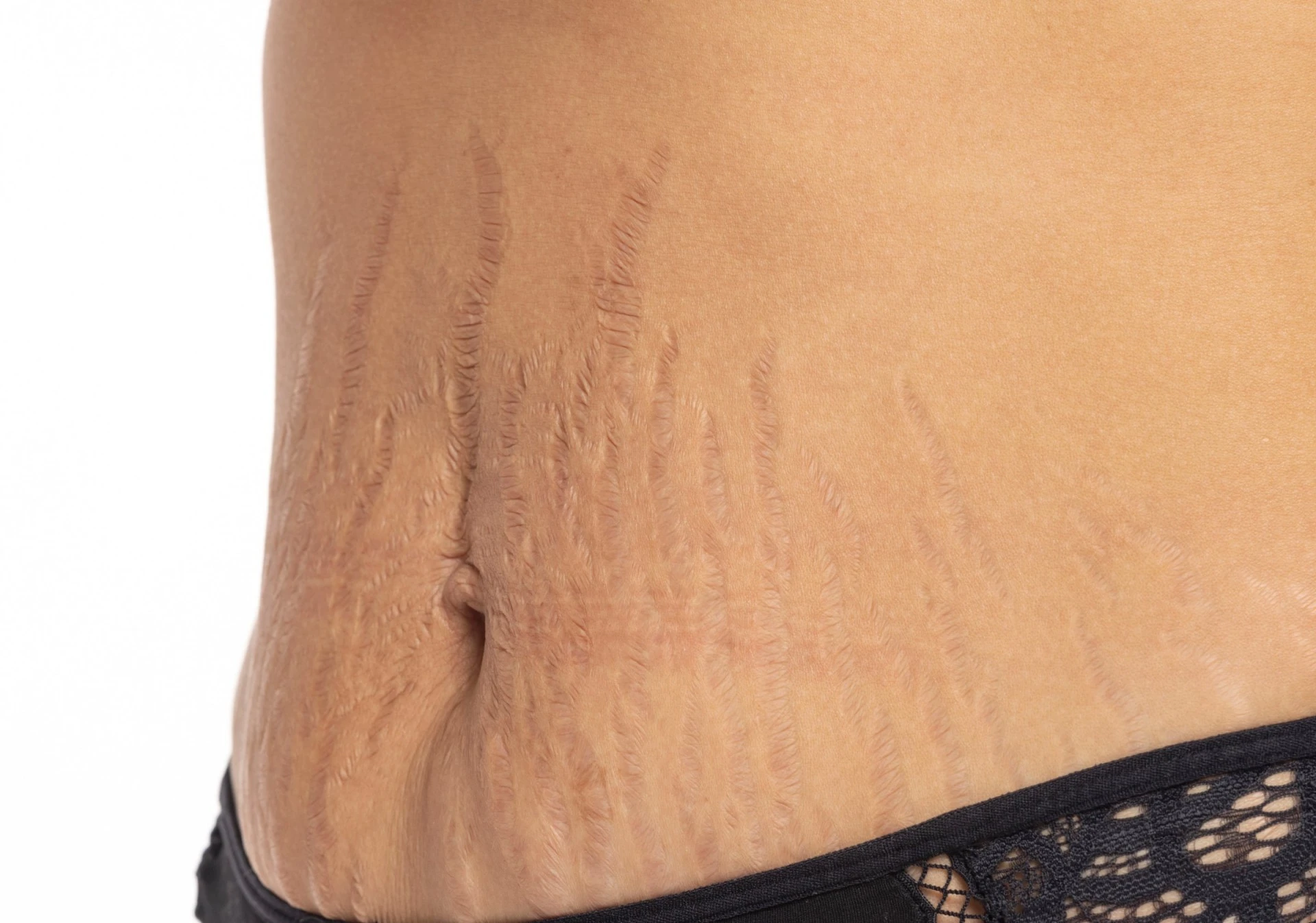

If you have observed the appearance of new stretch marks following an increase or decrease in body weight or sudden growth or even pregnancy, then you understand how irritating they can be. They usually appear in the form of reddish, pinkish, purplish, or dark-colored streaks and fade over time into lighter streaks. One of the frequently asked questions by patients as a dermatologist is if the use of retinoid creams can indeed minimize these stretch marks. Retinoids can indeed make these marks appear less visible, especially fresh ones, but not completely eliminate them. However, the process is slow and requires careful application since retinoids can be irritants.
Below are the things that you need to know about the use of retinoid creams for stretch marks.
About Stretch Marks
Retinoid cream for stretch marks are formed in cases where the skin stretches or changes at a much faster rate than its underlying structural layers. This condition occurs during:
- Pregnancy
- Puberty and rapid growth periods
- Rapid weight gain
- Rapid weight loss
- Rapid muscle growth
- Certain hormonal changes
- Long-term use of some corticosteroid medications
Stretch marks usually manifest on the following parts of the body: abdomen, thighs, hips, breasts, buttocks, upper arms, lower back, and other places. At first, they may have a color ranging from red to pink, purple, brown or even darker compared to the skin color. Later, stretch marks tend to become lighter or silvery colored. It is important to remember that stretch marks are very widespread among the population. This condition is not a sign of any wrongdoing and it does not indicate that your skin is unhealthy. Retinoid cream for stretch marks may be an option for improving the appearance of some newer stretch marks, but it is not a magic eraser.
Can Retinoid Cream Help Stretch Marks?
Yes, there is evidence that some forms of retinoids can be used to reduce the visibility of stretch marks, particularly new stretch marks. The use of tretinoin, which is a prescription medication containing retinoids, has been shown to be effective for new stretch marks. Tretinoin works by increasing skin cell turnover and also affects the production of collagen, which may lead to smoother skin and reduced visibility.
It is important, though, to have realistic expectations. Stretch marks are scarring of the skin due to stretching and changes in the deep layers of the skin. Creams cannot reverse this process and return the skin back to normal. If you already have older, white and somewhat indented stretch marks, the use of creams with retinoids will be less effective. So, if you’re considering retinoid cream, think of the goal as improving the texture and visibility of stretch marks rather than removing them completely.
How Does Retinoid Cream Work on Stretch Marks?
Retinoids are vitamins A derivatives that affect cell turnover and development. The effect of retinoid cream for stretch marks application may be increased cell turnover and stimulation of mechanisms involved in collagen production. Collagen is a significant structural protein responsible for skin’s strength, tightness, and elasticity. It is directly related to stretch marks as they appear when there is some transformation of skin deeper structure, which involves collagen and elastin. Studies on tretinoin topical application show that it is more efficient for relatively new stretch marks than mature ones. Using tretinoin regularly, a person may make their newer marks look better.
Retinoids Effect on the Skin
Retinoids effect develops gradually but not instantly. Retinoid cream for stretch marks regular application influences cell turnover and collagen remodeling and makes the skin look better over time. retinoid cream for stretch marks is not a dermal filler as it does not fill and remove indentations of stretch marks. Its effect lies in gradual influence on skin renewal.
Retinoids for New vs. Old Stretch Marks
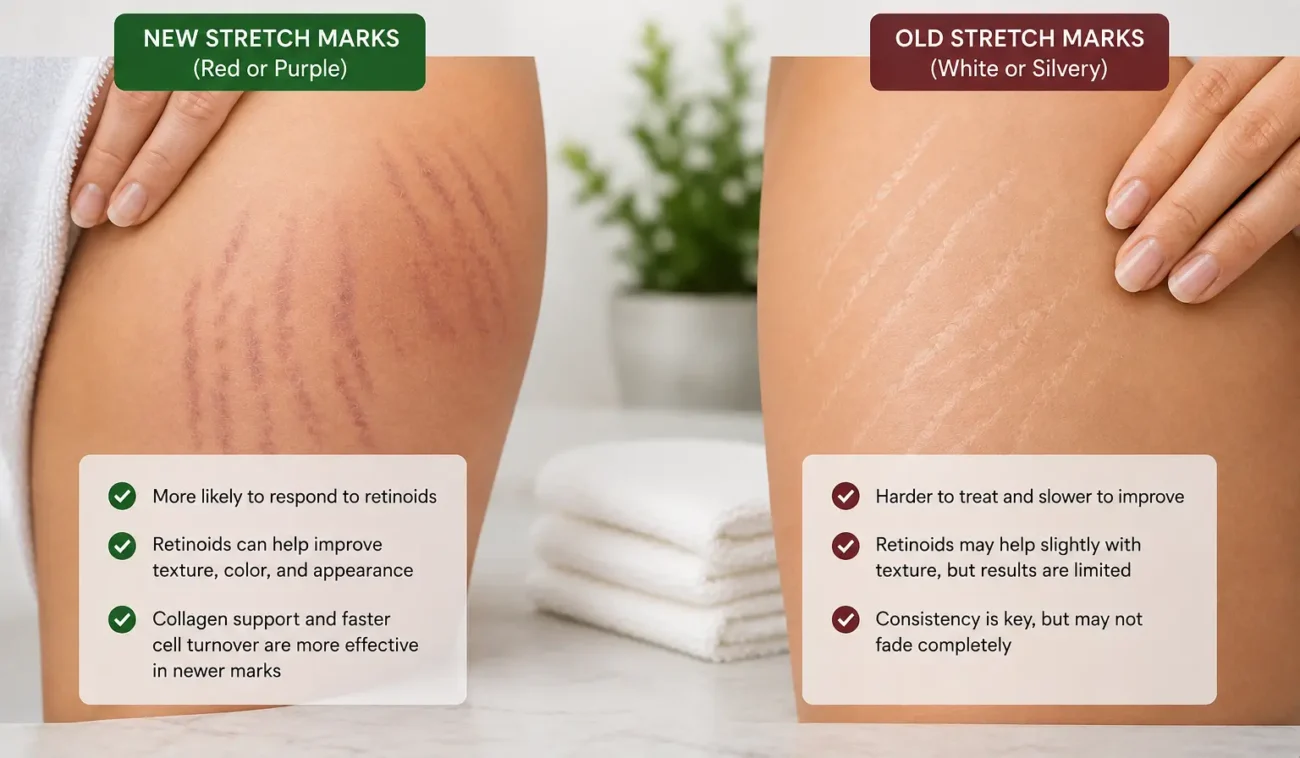
The age of the stretch marks will play a crucial role in the decision of which treatment to go for. Cream containing retinoid for stretch marks will be more effective for newer stretch marks than mature ones.
New stretch marks
Newer stretch marks usually have a reddish, pink, purple, or darker color compared to that of other areas of the body. They are called Striae Rubrae. As they are still in the early stages of formation, they might be better suited to some methods. This is the stage where retinoid cream for stretch marks, particularly tretinoin, has shown the most potential for improving their appearance. there is no guarantee of results. There are various aspects that affect whether or not the treatment will work.
Old stretch marks
Older stretch marks will generally appear lighter, whitish, or silvery and will be slightly depressed from the rest of the skin. These stretch marks are generally known as Striae Alba. Treatment will generally be less effective once stretch marks have become mature. But all is not lost. There are other treatment possibilities that a dermatologist may explore depending on the look of your marks, such as laser therapy or microneedling.
The best way of treating them could also depend on factors such as your skin type, location of stretch marks, their appearance and maturity. In case you do not know whether your stretch marks are new or old, you could get some clues from the color and texture, but a dermatologist could be able to give you a better answer.
How to Use Retinoid Cream for Stretch Marks
if the health care provider has advised you to use the cream containing retinoid cream for stretch marks, then do it gently. This is because the retinoids may cause irritation to the skin especially at the initial stage. A typical approach involves:
Apply it at night
It should be applied as part of a nighttime skincare regimen. Please follow the instruction that comes with your retinoid product.
Be Patient
If your skin is sensitive, your doctor will advise applying this therapy less often at first. Application frequency can be raised gradually as your skin gets accustomed to the medicine.
Apply a Thin Layer
Your skin does not need to be covered by a thick layer. More cream does not mean better effect and increases irritation risks.
Apply Moisturizer
Use of a soft, hypoallergenic moisturizer will help avoid dryness and peeling caused by retinoids.
Avoid Sun Exposure
When applying it to an area that will be exposed to the sun, it is vital to use broad-spectrum sunscreen and protective clothing. UV light exposure leads to the aggravation of discolorations and makes irritated skin more vulnerable.
Stop Using in Case of Any Irritation
It is normal to feel dryness if the retinoid therapy is started; however, burning, swelling, blisters, and inflammation are not acceptable. Inform your healthcare provider about your condition if there is any concern.
Remember: do not apply retinoid cream for stretch marks to broken, sunburned, or severely irritated skin.
How Long Does Retinoid Cream Take to Improve Stretch Marks?
This is where many people become disappointed. Retinoid cream for stretch marks does not work quickly. Although even in case it works, the change will usually start becoming evident slowly over the period of several weeks or months. Some changes might be visible in terms of texture and color before the actual change occurs. Some things which can affect how effective the retinoid cream will be include:
- How old the stretch marks are
- The size and depth of the stretch marks
- The color of the stretch marks
- Skin type
- Type of the retinoid and its concentration
- Consistency of usage of the product
- Skin being stretched
If you have been using a prescribed retinoid consistently and are not seeing improvement after a reasonable treatment period, do not automatically increase the strength yourself. A dermatologist can determine whether continuing the treatment, changing the approach, or considering another option makes more sense.
Retinoid Stretch Marks Before and After
Before-and-after photographs may make retinoid cream for stretch marks seem more effective than it really is. Factors such as lighting, camera angle, hydration, tanning, and photo editing may affect the appearance of stretch marks on photographs. Therefore, it is much more appropriate to compare your progress in identical conditions. Realistic improvement may include:
- The marks becoming less noticeable
- Improved skin texture
- Reduced contrast between the marks and healthy skin
- Changes in color of the new marks
you should not expect perfect skin in just a few weeks. The effect of retinoid cream for stretch marks on recently acquired red marks will be more noticeable than on white marks that were formed several years ago. Nevertheless, even in this case, the effect will consist in making the marks less visible, but not in eliminating them entirely. If you are monitoring your results yourself, take the photos every few weeks under identical lighting, from the same distance and at the same angle.
Who Should Avoid Retinoid Cream for Stretch Marks?
Retinoids are not appropriate for everyone. Pregnancy is especially important. Usually, topical retinoids like tretinoin are not recommended to be used during pregnancy. If you are pregnant, are going to get pregnant, or are possibly pregnant, consult your health care provider before applying retinoid cream for stretch marks. Consult your health care provider about the use of retinoid if you have:
- Very sensitive skin
- Eczema or active dermatitis
- Sunburn or damaged skin in the treatment area
- Allergy to any components of the cream
- Other prescription treatments being used on the same area
Do not assume that all retinoids are suitable for you just because they are applied on the skin. Even if it is a prescribed medication, it should be used properly. If you are breastfeeding a child, do not make your own decision about the applicability of the retinoid. Discuss it with your doctor or pharmacist.
What Retinoid Strength Is Best for Stretch Marks?
There is not just one retinoid concentration that will work for everyone. Tretinoin is sold in various strengths, and the right choice for you will depend on things like your level of skin sensitivity, body areas where treatment is needed, history with using retinoids, and the underlying problem that requires tretinoin. A high concentration does not mean high effectiveness. Indeed, choosing the strength that irritates your skin too much can make you unable to use tretinoin regularly. Strong redness and dryness can affect the skin barrier.
For treating stretch marks with tretinoin, you should be examined by a dermatologist or another specialist who can prescribe the proper treatment with retinoid creams for stretch marks. Do not buy a higher concentration just because you have read on the internet that someone got quick results using it. It may irritate your skin strongly.
Medical Disclaimer
This article is for informational purposes only and does not replace professional medical advice. Tretinoin may cause dryness or irritation. Follow your prescriber’s instructions and consult a healthcare professional for severe or persistent irritation.