


If you have been advised to use tretinoin cream 0.05%, you might want to learn more about its strength, usage, and methods of using it without suffering from too much skin dryness and irritation. Tretinoin is among the most studied topical retinoids, which are used in dermatological treatments of acne and photoaged skin. However, getting good results is not simply about using the strongest concentration. The key is using the right amount, applying it consistently, protecting your skin from the sun, and giving your skin enough time to adjust. In this article, we will consider tretinoin cream 0.05% including its uses, benefits, side effects, application routine, and practical ways to minimize irritation.
What Is Tretinoin Cream 0.05%?
Tretinoin works primarily by influencing skin-cell turnover. It may play a role in preventing pore blockages and also brings about some modifications in the skin caused by collagen remodeling. This explains why dermatologists may recommend the use of the tretinoin cream 0.05% to treat acne and photoaged skin. Tretinoin is available in different strengths and formulations. It does not mean that a high concentration always suits everybody. Your dermatologist may take into account some factors, including the sensitivity of your skin, the objective of therapy, previous exposure to retinoids, and tolerance of treatment when choosing the required concentration. Tretinoin cream 0.05% is a prescription medication in many countries. and thus must be applied following the advice of your health professional.

What Is Tretinoin Cream 0.05% Used For?
Acne
Tretinoin has been a popular choice for topically treating acne. It assists in reducing clogged pores and preventing new acne eruptions. Using this medicine continuously can result in clear skin eventually. Tretinoin cream 0.05% is not a miracle product, and using it does not guarantee fast results. Acne may get worse initially and requires time to see improvement, which can take several weeks.
Fine Lines and Wrinkles
There is also evidence on how tretinoin is effective against photoaging. It may improve skin texture, fine lines, and even some of the signs of sun damage. But tretinoin is not supposed to be advertised as a product that gets rid of wrinkles. These improvements gradually develop, and regular use for a long time is necessary.
Dark Spots and Uneven Skin Tone
Using tretinoin can increase skin-cell turnover and assist in getting rid of certain types of hyperpigmentation. Sometimes, it is included in the treatment plan of post-inflammatory hyperpigmentation and other hyperpigmentation cases. In the case of melanoma, it should be prescribed and monitored by a dermatologist due to the complex nature of pigmentation problems.
Is 0.05% Tretinoin Good for Beginners?
Not always, A beginner does not automatically need 0.05%. If you have never used a retinoid before, A dermatologist may recommend starting with a lower concentration or using a lower frequency to help your skin adjust. Your skin’s tolerance is more important than simply choosing a particular percentage. If a person has successfully tolerated a lower concentration of tretinoin, he or she might be prescribed 0.05%. A patient with very sensitive skin might find it hard to tolerate 0.05%. Sometimes stronger is not necessarily better. A lower concentration that is usable on an ongoing basis is preferable to one that irritates all the time.
How Does Tretinoin 0.05% Work?
Tretinoin attaches itself to retinoic acid receptors within skin cells and affects genes responsible for differentiation and turnover. In acne-prone skin, such effect can help normalize keratinization and protect pores from clogging. For photoaged skin, long-term tretinoin use can support changes associated with collagen production and remodeling. One of the reasons why tretinoin can be used by dermatologists when treating fine lines and texture as well as certain effects of sun damage.
The important point is that these changes take time. You should not expect any miraculous change within 24 hours after using tretinoin. Actually, dryness, peeling, reddening, and even mild irritation can precede improvement. Increasing dosage of tretinoin will not speed up any biological process. Moreover, such increase can only cause irritation.
How to Use Tretinoin Cream 0.05%
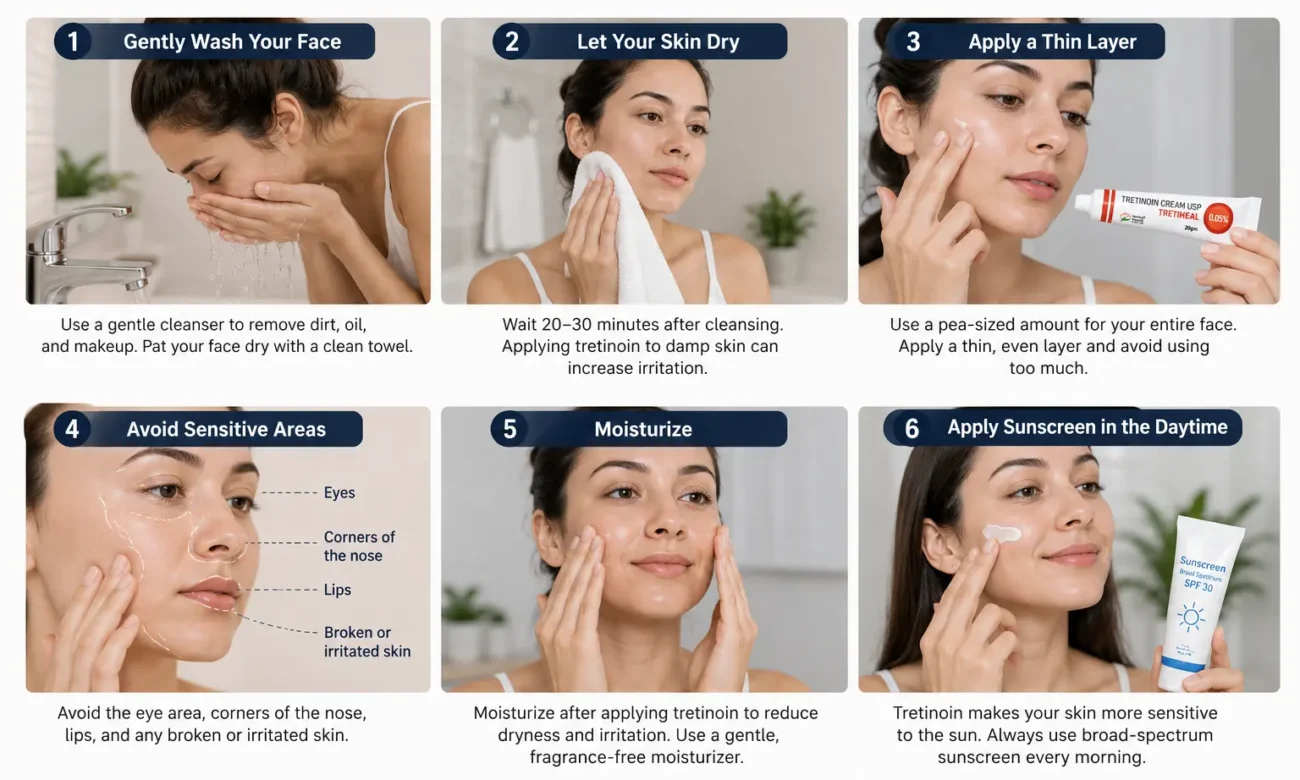
If your dermatologist has recommended tretinoin cream 0.05, follow their specific instructions. A typical nighttime routine looks like this:
Gently Wash Your Face
Gently wash the face with a mild cleanser and lukewarm water. It is necessary to use soft cleansing in order to minimize irritation.
Let Your Skin Dry
The skin should be fully dry when applying tretinoin. Using the tretinoin on wet skin may cause an increase of irritation.
Apply a Thin Layer
Use the amount that is recommended by your dermatologist. Usually a small amount is enough in order to achieve good results.
Avoid Sensitive Areas
Avoid the eyelids, corners of the nose, lips, and any other irritated parts of skin unless instructed otherwise.
Moisturize
Dryness can occur as a result of treatment. In such case, it is advised to use moisturizers.
Apply Sunscreen in the Daytime
Apply a broad-spectrum sunscreen during the daytime. because the retinoid makes the skin more sensitive to sun exposure and causes pigment problems.
How Long Does Tretinoin cream 0.05% Take to Work?
One of the major things that beginners do is anticipate seeing results within a few days. Tretinoin cream 0.05 usually needs continuous application for weeks or months to produce visible effects. In case of acne, it is not unusual for individuals to have more breakouts or irritation before they begin seeing results from the product. Treatment of acne can take up to a few weeks or even longer. For photoaging concerns such as fine lines and texture, the process will take more time and effort. If your skin is becoming severely irritated, do not assume that the product is becoming more effective and therefore increase the dose. Seek guidance from your dermatologist.
Tretinoin Cream 0.05% Side Effects
Dryness and irritation are some of the most prevalent side effects associated with tretinoin treatment. You may have the following:
- Dry and tight skin
- Peeling or flaking
- Redness
- Burning or stinging
- Increased sensitivity
- Temporary irritation around the nose and mouth area
These effects are often more noticeable during the adjustment period. Nonetheless, excessive swelling, blisters, extreme burning sensation, or any form of inflammation is not something to ignore. If such effects occur, you should stop applying the tretinoin and seek medical assistance. If irritation is preventing you from using your medication consistently, your dermatologist may recommend changing how frequently you apply it or modifying your skincare routine.
Can You Use Moisturizer With Tretinoin 0.05%?
Yes. Using a moisturizer with tretinoin cream 0.05% is an effective way to help treat dry skin and maintain skin barrier. Some people apply moisturizer after tretinoin, while others use moisturizer before tretinoin when they are particularly sensitive. This approach is known as Buffer Method, while another approach is called the Sandwich Method. In this approach, people apply moisturizers both before and after the application of tretinoin.
The best approach depends on how your skin responds. Choose an appropriate moisturizer depending on the type of your skin. If you have oily or acne-prone skin, you may choose light lotion or gel-cream. The use of cream as the moisturizer is necessary in case if tretinoin cream 0.05 causes excessive dryness. Remember one thing, do not consider moisturizers to neutralize tretinoin effect. An easily tolerated regimen may facilitate the treatment process.
Medical Disclaimer
This article is for informational purposes only and does not replace professional medical advice. Tretinoin may cause dryness or irritation. Follow your prescriber’s instructions and consult a healthcare professional for severe or persistent irritation.